



COAT CARE FOR
SENSITIVE SKIN
Fragrance-free skin and coat care products suitable for dogs with sensitive skin and allergies.
Please select your store

We will include your personalised message on an elegant gift card and your order will be wrapped in a beautiful gift box.

Fragrance-free skin and coat care products suitable for dogs with sensitive skin and allergies.

Protection: By shielding the body from harmful external agents such as bacteria, viruses, pollutants, and allergens, the skin barrier helps prevent these substances from entering the body and causing infections or irritations.
Water Retention: By retaining moisture and preventing excess water loss, the skin barrier works to prevent dryness and dehydration.
Temperature Regulation: While dogs and cats don’t sweat like people do, the skin still plays an important role in maintaining an ideal temperature mostly via the haircoat.
UV Protection: By shielding the deeper layers of the skin from UV light, the skin barrier can help protect against free radical damage. But remember that animals with lighter skin and less hair coverage will be more prone to sunburn.
Sensory Perception: The skin barrier helps transmit sensory signals (such as touch, pressure, temperature and pain)to the nervous system.

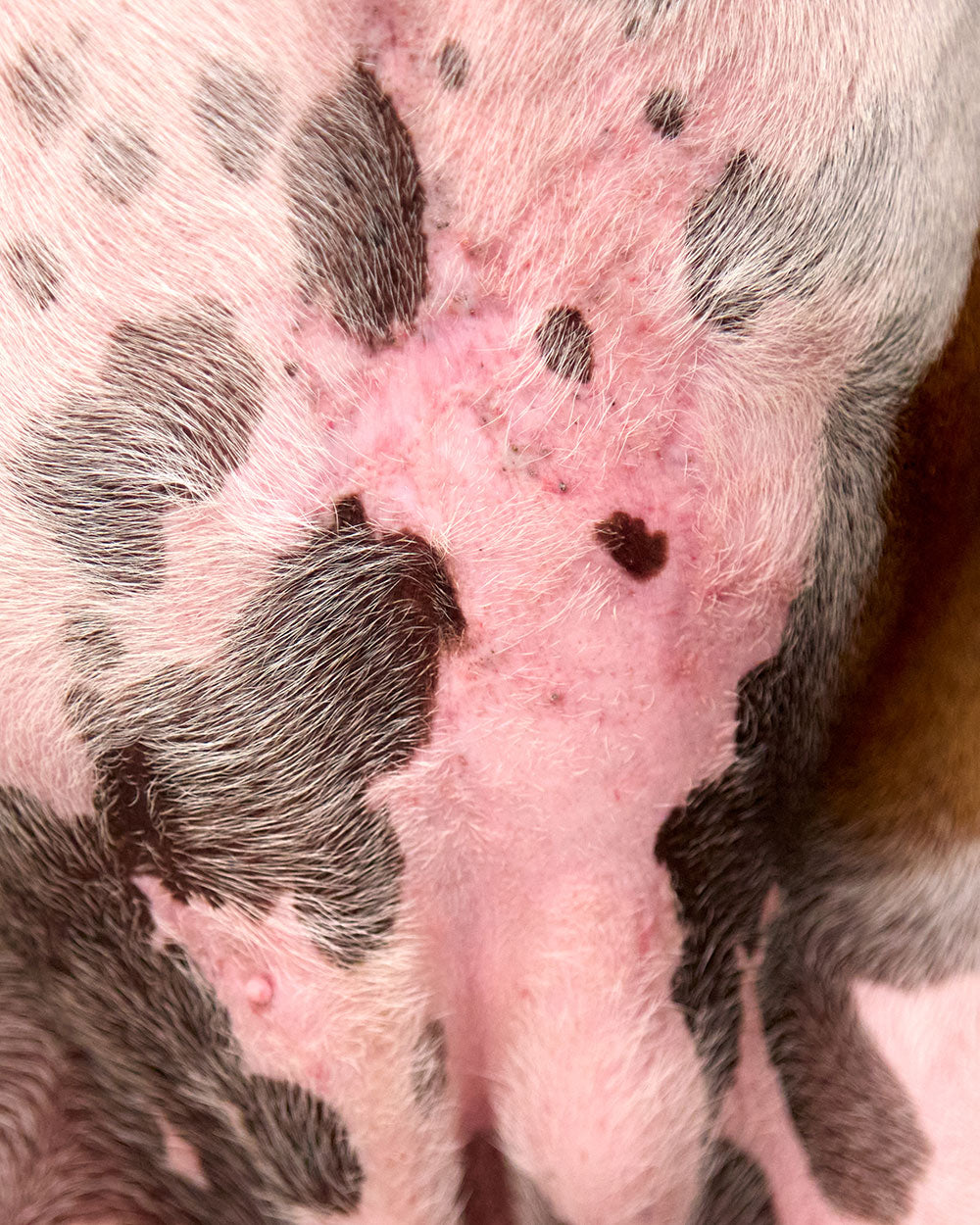
These symptoms can form part of an ongoing cycle of itchiness and inflammation that can lead to secondary skin infections. Dogs don’t tend to have an “off-switch” when it comes to scratching, licking and chewing: when they feel an itch, they are going to scratch. Licking excessively? This is often because they are itchy!
By recognising the signs of a compromised skin barrier early, we can help to repair and protect it, which can lead to a faster recovery and reduced risk of allergies and infections.
Proper skincare, including moisturising and protection from environmental stressors, will help maintain a robust skin barrier and a healthy coat.

Sensitive skin is one of the most common reasons dog parents end up in the vet's waiting room. Picking the right dog shampoo for sensitive skin is often the first, most practical step towards giving your dog some relief.
Read More
Not all "sensitive" products are created equal. A lot of shampoos on supermarket shelves slap "gentle" or "sensitive" on the label while still packing sulphates, synthetic fragrances, and other irritants that can aggravate an already-compromised skin barrier.
DOG by Dr Lisa’s sensitive dog shampoo formula is built from the ground up with a compromised skin barrier in mind. That means fragrance-free, soap-free, and free from the nasties. It’s also lipid-rich and extra hydrating to protect and nourish the skin. The goal isn't just to clean your dog's coat; it's to cleanse without stripping away the natural oils that keep that skin barrier doing its job.
Sensitive skin and allergic skin often go hand in hand, but they're not always the same thing. A dog can have sensitive skin (easily reactive, occasional itching, prone to mild redness or flaking) while an allergic dog might be itching more regularly with redness and secondary skin infections due to fleas, contact, environmental and food allergies. We always recommend a vet check to help determine what the underlying cause could be.
That's why we formulate our dog shampoo and conditioner for sensitive skin to tackle both angles at once. They deliver nourishing ingredients and are designed to support the underlying barrier function long-term and can often be used together with the products prescribed by your vet.
Browse our full range of dog care products, or head straight to our dog wash products to build a routine tailored to your dog’s needs. Our dog shampoo and dog conditioner range offers options for every dog.
Yes. Fragrances are among the most common triggers of skin reactions in dogs with sensitivities. A fragrance-free dog wash for sensitive skin removes one of the biggest variables, making it much easier to work out what's actually helping (or hindering) your dog's coat.
Absolutely. In fact, we'd encourage it. A leave-in dog conditioner for sensitive itchy skin can be applied between washes to top up moisture and soothe irritation, without needing a full bath every time.
It varies dog to dog, but a gentle wash no more than every 4-6 weeks is a common starting point, with your vet's guidance for your individual dog.
Not on its own. A quality, sensitive dog wash can nourish and support the skin barrier, but underlying allergies (flea, contact, environmental and food) require a broader approach, including a visit to your vet. Topical care and internal support (like supplements) work best as a team when coupled with your vet’s diagnosis.
Read Less
Sensitive skin is one of the most common reasons dog parents end up in the vet's waiting room. Picking the right dog shampoo for sensitive skin is often the first, most practical step towards giving your dog some relief.
Not all "sensitive" products are created equal. A lot of shampoos on supermarket shelves slap "gentle" or "sensitive" on the label while still packing sulphates, synthetic fragrances, and other irritants that can aggravate an already-compromised skin barrier.
DOG by Dr Lisa’s sensitive dog shampoo formula is built from the ground up with a compromised skin barrier in mind. That means fragrance-free, soap-free, and free from the nasties. It’s also lipid-rich and extra hydrating to protect and nourish the skin. The goal isn't just to clean your dog's coat; it's to cleanse without stripping away the natural oils that keep that skin barrier doing its job.
Sensitive skin and allergic skin often go hand in hand, but they're not always the same thing. A dog can have sensitive skin (easily reactive, occasional itching, prone to mild redness or flaking) while an allergic dog might be itching more regularly with redness and secondary skin infections due to fleas, contact, environmental and food allergies. We always recommend a vet check to help determine what the underlying cause could be.
That's why we formulate our dog shampoo and conditioner for sensitive skin to tackle both angles at once. They deliver nourishing ingredients and are designed to support the underlying barrier function long-term and can often be used together with the products prescribed by your vet.
Browse our full range of dog care products, or head straight to our dog wash products to build a routine tailored to your dog’s needs. Our dog shampoo and dog conditioner range offers options for every dog.
Yes. Fragrances are among the most common triggers of skin reactions in dogs with sensitivities. A fragrance-free dog wash for sensitive skin removes one of the biggest variables, making it much easier to work out what's actually helping (or hindering) your dog's coat.
Absolutely. In fact, we'd encourage it. A leave-in dog conditioner for sensitive itchy skin can be applied between washes to top up moisture and soothe irritation, without needing a full bath every time.
It varies dog to dog, but a gentle wash no more than every 4-6 weeks is a common starting point, with your vet's guidance for your individual dog.
Not on its own. A quality, sensitive dog wash can nourish and support the skin barrier, but underlying allergies (flea, contact, environmental and food) require a broader approach, including a visit to your vet. Topical care and internal support (like supplements) work best as a team when coupled with your vet’s diagnosis.
Read Less




