If you are a customer in Australia or another country (excluding USA/Canada), visit our Australian website. If you are a customer in the USA/Canada, visit our USA website.
Brush up on brushing and find your dog’s perfect grooming tool
We humans love to preen and pamper. Our dogs, less so. But daily brushing is an essential part of looking after your dog’s skin and coat.
In fact, brushing is more beneficial for your dog than you might realise. Regular brushing stimulates hair growth and helps spread natural oils through the coat and skin while removing dead, loose hairs. Not only that, but daily brushing will actually reduce that unwanted doggy smell and encourage a healthy skin and coat.
There’s a heartwarming reason to brush your best friend too: grooming is a wonderful way to bond with your best friend. For the most part, it feels good to receive a gentle brush and it also allows you to inspect the skin for lumps, bumps, parasites or abnormalities. And of course, if you find any of these, see your vet.
DOG Slicker Brushes
Slicker brushes will work on most coat types. The short bristles will grab and remove loose hairs and debris. A daily brush will help reduce the amount of hair shed around your home. Keep in mind that frequent brushing will reduce tangles and matting.
Now when it comes to choosing the right brush for your dog, it depends on a few factors. Does your dog have a long or short coat? Curly or straight? Double or single coat? Our system of brushes makes things easy to ensure you have the right tools for your dog.
Our Slicker Brush is the perfect everyday brush, designed for all coats to remove loose hairs and debris. Available in two sizes, the Small is suitable for mini breeds or as a face brush for larger dogs. The Large, naturally, is for bigger dogs.
If your dog has a curly or long coat that frequently tangles, adding a Comb into the mix will help manage their mains while preventing future tangles. A spritz of Leave in Conditioner Spray will be necessary in your arsenal too.
For thick double coat breeds, the Rake will be your new best friend. It removes the thick undercoat and helps manage shedding.
Dr Lisa’s tips for best brushing
Start with the Comb or Rake, depending on your dog's coat, and gently comb away from your dog’s skin in the same direction the coat grows.
If you encounter tangles, gently untangle as you would your own hair.
For especially tricky knots, apply some Leave in Conditioner and use the Comb or Rake to separate the knot.
Follow with the Slicker Brush.
Make brushing a positive experience by having a handful of treats to reward your dog as you go.
For apprehensive dogs, introduce brushing slowly with short sessions and lots of positive reinforcement.
If you’re unable to untangle a knot, visit your professional groomer or vet. Avoid attempting to cut the knot yourself as you may accidentally cut your dog’s skin.
The easiest way to clean your Slicker Brush is to slide the Comb or Rake into the bristles to help lift out the fluff.
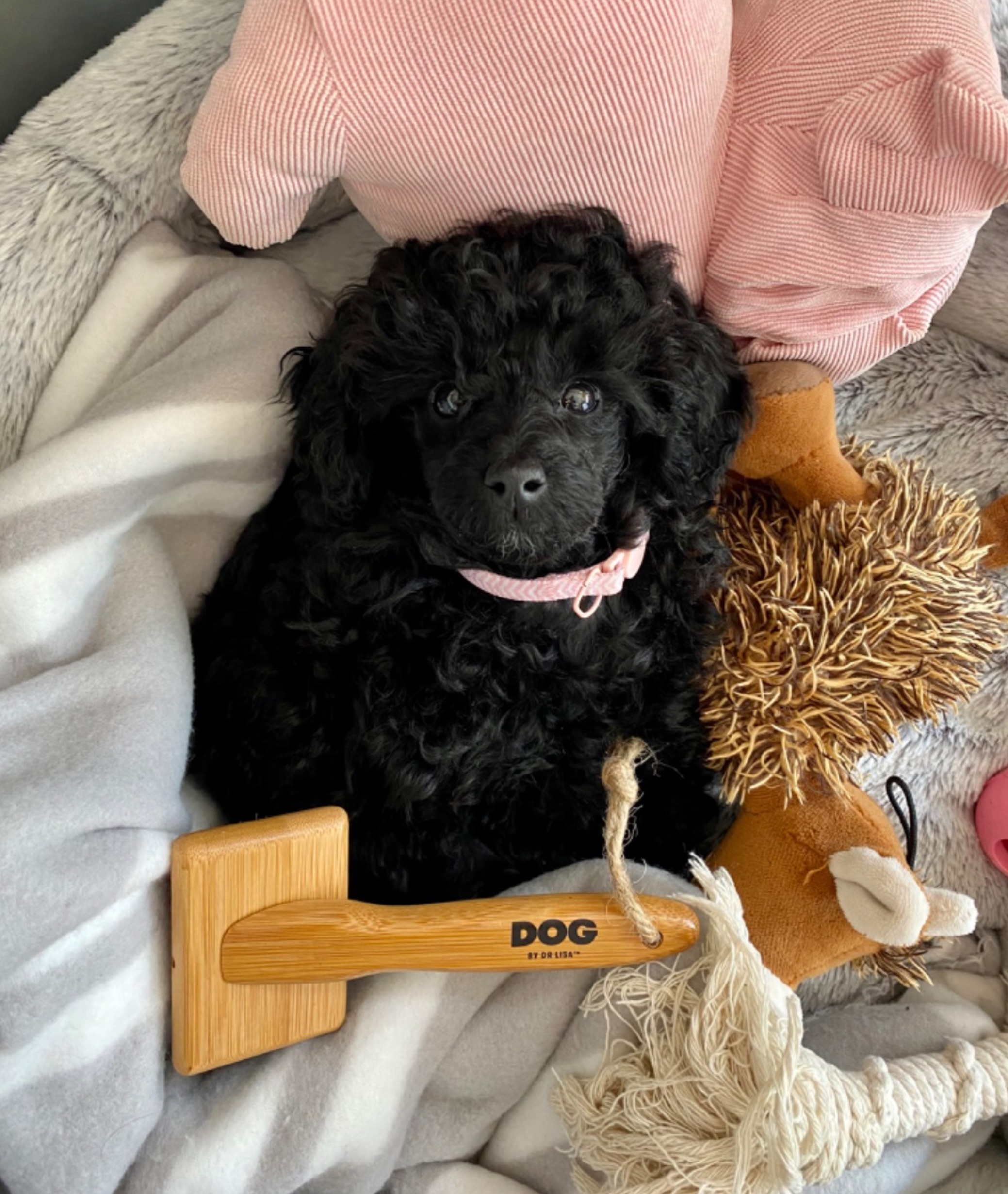
"We love this little brush, it is the perfect size and I love that it is sustainable made with wood too. Also the bristles are small enough to brush through my darling little toy poodles fur. We both love using it everyday to make her look BEAUTIFUL! I’m very happy with all of Dr Lisa’s products so far. "




 3 Min Read