How to introduce dog training to your kids
Getting kids involved in dog training is a wonderful way to encourage responsibility and enhance problem solving skills. Your child will develop a powerful bond with the family dog, improving confidence for kids and dogs alike. Children of all ages can participate too, just ensure the tasks are age-appropriate and there’s always adult supervision.
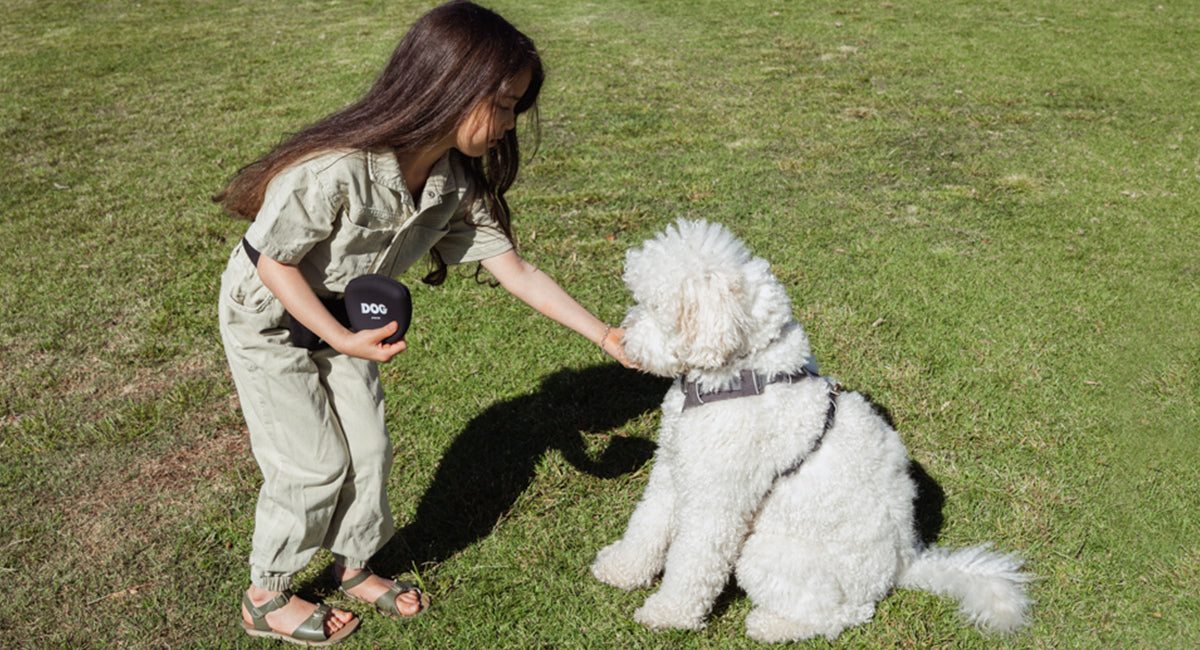
Dog training 101
- Teach your kids to read your dog’s body language - this will help them understand when your dog is not enjoying an encounter, thereby reducing stress for your dog.
- Put a Kids Belt Bag on your child - fill the silicone treat pouch with small pieces of treats, like our Crumble. This provides your child with round the clock access to treats so they can reward your dog throughout the day. By doing this, you are helping your dog identify your child as a ‘leader’, which will foster mutual respect between them.
- Teach kids the basics of positive reinforcement; it’s when we reward the correct behaviour and ignore the wrong behaviour.
- Demonstrate how to entice your dog to perform a behaviour through “capturing” (waiting for the behaviour to be offered) or “luring” (using a treat in their hand to guide your dog into a position).
- Add in a cue word to pair the behaviour with the action.
- Teach kids to feed treats with an open hand so little fingers are protected. Alternatively a treat can be dropped on the floor.
- Keep training sessions short and sweet, no more than 5-10 minutes (potentially shorter for young puppies who may get distracted easily) to begin with, with the activity repeated regularly.
DOG Kids Belt Bag
There’s nothing quite like kids and dogs playing together. The giggles, the licks, the heart-exploding cuteness of it all. Yet kids can do so much more than play. They can also teach, learn from and grow with dogs. This bag empowers them to do just that.
Teach ‘Sit’
An excellent cue to begin with, demonstrate the above to your child.
Using a treat to lure, hold the treat over the dog’s nose and move backwards over the dog's eyes. Your dog will inadvertently sit while focusing on the treat. Use the cue word ‘sit’ as your dog makes the movement and reward instantly. Repeat 5 times.





 1 Min Read


