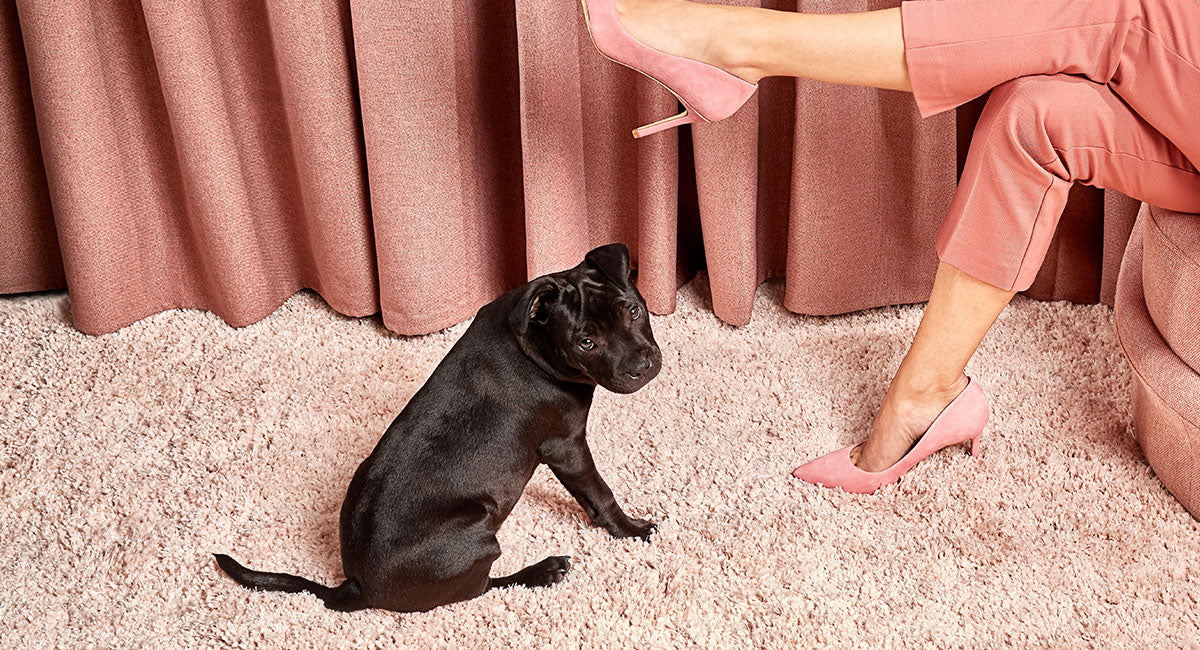
Your puppy just made eye contact with you, held it for a solid two seconds, and weed on the rug. Direct hit. This is a normal part of welcoming a new puppy into your home. But the sooner and more thoroughly you complete toilet training, the more likely your rug is to see another day.
Toilet training is less about discipline and more about biology, timing and a good cleaning product. Get those three things right, and most dogs pick it up faster than you'd think.
Top Tips
- Toilet training works through routine and reward, not correction. Take your dog to their toilet spot often and praise them the second they go
- Puppies physically can't hold on for long. Their bladder control keeps developing right up until around 12 months of age, so accidents in the early weeks are normal, not a training failure
- When unsupervised, keep your dog in a confined area by using a playpen or dog crate
- Roll up rugs and block access to carpeted areas where possible
- Watch for the tell-tale signs (sniffing, circling, sudden stillness), and get outside before they happen, not after
- Clean accidents with an enzymatic urine cleaner to neutralise the urine odour -don’t use a household detergent, or your dog will keep returning to the same spot
- Never punish an accident. It doesn't speed up training, and it can create fear and accidents in hiding instead
Why Your Dog Keeps Going in the Same Spot
Dog urine carries a lot of information about your dog. It’s their own scent signature. Once a spot is marked, that smell serves as a signpost pointing to "toilet here."
That's why mopping with an ordinary household cleaner rarely solves repeat accidents. It might clear the smell for you, but your dog's nose picks up traces you can't, so unless the odour-causing compounds are properly neutralised, they'll keep returning to the same spot.
Don’t Let Them Roam Free in Your House Until They’re Properly Toilet-Trained
Giving your dog free access to the entire house before they’re fully toilet trained usually leads to accidents and slows the learning process. Puppies develop better habits when their space is managed, as they’re less likely to pee or poop in a small, designated area, especially if their bed is nearby. Using a properly sized crate or a secure playpen can keep your puppy safe, prevent unwanted habits, and set them up for successful toilet training. As your puppy becomes more reliable, you can gradually give them access to more areas of the home - doing this too soon is one of the most common reasons for toilet-training failures.
Set a Routine for Your Dog to Succeed
Toilet training runs on repetition. The more chances your dog gets to go in the right spot (and the faster you reward them for it), the quicker the habit sticks.
Take them out:
- Every 1-2 hours during the day for young puppies
- First thing in the morning, after naps, and right before bed
- After every meal or drink
- Before and after play, visitors, or anything exciting
- The moment you spot early warning signs
For puppies, an hourly reminder on your phone can help. The goal is always to get outside before the accident happens so that you can reward the correct behaviour, rather than react once an accident has occurred.
It's worth knowing what you're working with biology, too. Dogs don't reach full bladder capacity until they're roughly 12 months old, so a young puppy simply doesn't have the physical control to "hold it" for hours, no matter how well the training is going.
Praise Generously, Skip the Punishment
Reward-based, positive reinforcement is the most effective way to make toilet training stick. The reward needs to land as soon as your dog finishes the wee or poo, not once they're back inside, or they won't connect the praise with the behaviour.
Keep it calm and wait until they’ve finished. You don't want them stopping halfway through, as this can cause accidents inside because the bladder wasn’t completely emptied. A gentle "good dog," a pat, or a small treat right as they finish is enough.
If there's an accident, resist the urge to scold. Calmly interrupt if you catch them mid-act and redirect them to the right spot. Shouting or rubbing their nose in it teaches nothing useful, and can make a dog anxious enough to start toileting in hidden corners instead of where you can see them.
If accidents keep happening despite a consistent routine, it's worth a vet check. Persistent difficulty can sometimes point to a urinary tract infection or another medical issue affecting bladder control rather than a training gap.
Clean Up Properly
Pick up the poop with our 100% compostable vanilla-scented dog poo bags. For urine, an enzymatic dog pee spray does the job that ammonia-based or generic sprays can't. It neutralises the odour-causing molecules rather than just masking them.
Blot up the moisture first, then saturate the area properly so the scent markers are actually broken down, not just perfumed over. Keep a bottle handy wherever your dog's favourite "spot" happens to be, so you can act fast.
If your dog's paws or coat pick up any mess in the process, a quick clean with our dog wipes makes the job easy.
Toilet training an older dog follows the same process. Always have a vet rule out underlying medical problems and incontinence issues first. If the toileting accidents are truly behavioural, it might take a little longer especially for old habits, but patience and consistency get there in the end.
Toilet training can sometimes feel like forever. But hang in there. Stick with the routine, reward the wins, clean up properly, and you'll make it through. Explore our full range of dog care products to help along the way.





 1 Min Read