



Got a question?
Can’t find an answer on our blog? Click here to ask Dr Lisa.
Please select your store

We will include your personalised message on an elegant gift card and your order will be wrapped in a beautiful gift box.
 1 Min Read
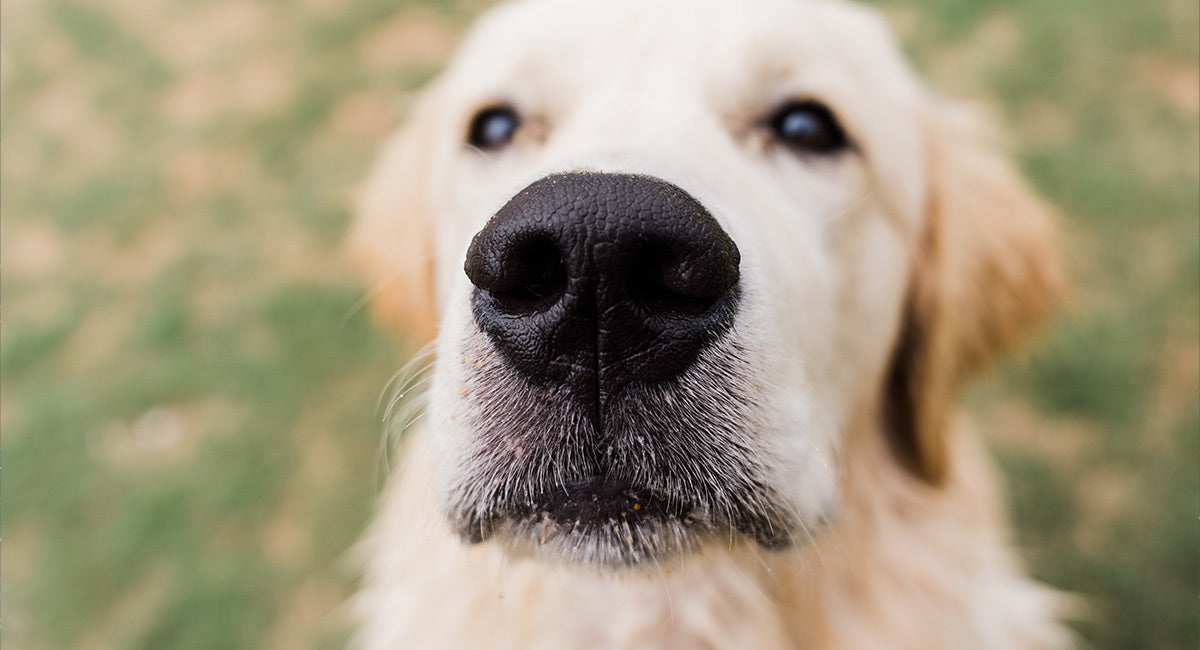
A dog’s nose is a mind-blowing organ with the ability to detect scents up to 1000-10,000 times more effectively than humans. They can sniff out substances at concentrations of one part per trillion. Meaning a single drop of liquid in 20 Olympic-size swimming pools.
Furthermore, dogs also have something called neophilia, which means they are attracted to new things, especially interesting odours. And dogs with longer snouts are generally better at scent detection than those with shorter faces.
But one thing a dog's nose can’t do is clearly tell you how healthy they are based on its moisture levels. Here we explain why it’s not so cut and dry.
Firstly, a wet nose is a result of normal mucus production. Clear and watery mucus keeps the nose and nasal passages moist, improving scent detection.
Licking the nose helps your pooch intensify and identify scents. That moisture also helps them to determine the direction a smell is coming from, a superpower that helps them to find a scrap of food before you’ve even seen it.
Dogs will lick the nose to clean and transfer scent particles into the vomeronasal organ in the mouth. This special organ enhances their ability to detect scents, contributing to their super-sniffing abilities.
While normal wetness is ok, excessive amounts of nasal discharge can indicate a problem. Environmental particles such as dust, smoke and pollen can cause irritation and allergies. Watch out for white, yellow, green, brown or bloody discharge as this may be a sign of something more serious that will need your vet’s assessment.
Some dogs naturally have drier noses than others. Infact, the temperature and moisture of your dog’s nose will change throughout the day depending on their activity. If your dog has a dry nose it’s likely because they’re asleep or have just woken up. In some cases they may be a little dehydrated, so replenish their bowl with fresh clean water.
Dogs' noses can naturally become drier as they age. This does not necessarily mean they are unwell.
Dogs with light-coloured noses can be prone to sunburn, so if this is your dog, make sure you have some pet-friendly sunscreen handy. If you notice a change in nose colour, crusting, redness or lumps then please see your vet as this can sometimes indicate a serious illness.

Can’t find an answer on our blog? Click here to ask Dr Lisa.