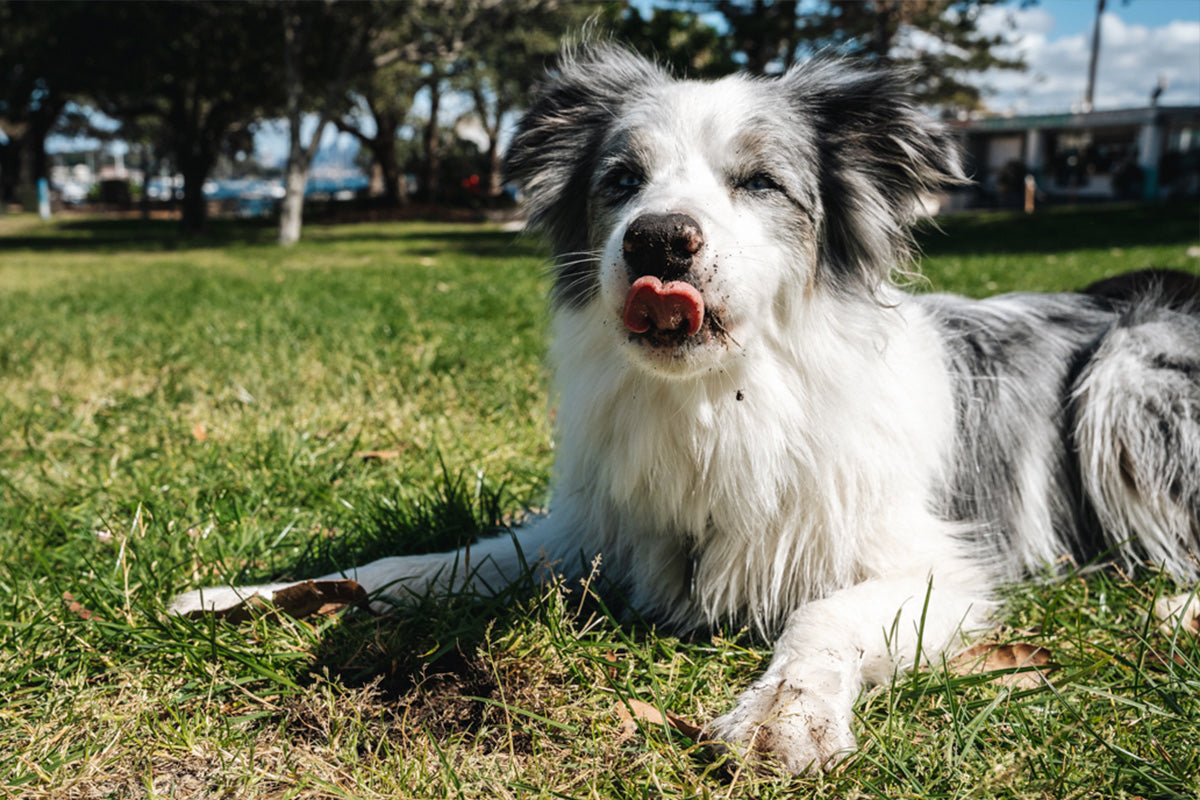
Your dog's been at it again, grazing happily on the lawn like a very small, very fluffy cow. Honestly? It's probably fine. But if you've ever wondered what's actually going on when your dog chews through a patch of grass, it’s a surprisingly common question. Here's what the science says.
Quick Answer
- Grass eating is normal and extremely common
- Most dogs are not sick beforehand, and the majority don't vomit after
- The most likely reasons are enjoyment, instinct, fibre-seeking, or boredom
- It's worth a vet check if it's a new behaviour or your dog seems unwell
- Grass treated with pesticides or fertiliser is a different story. Keep your dog away
The Big Myth: Grass Makes Your Dog Sick
Most people assume their dog must be feeling crook if they're eating grass. But research doesn't back this up.
A landmark study by veterinary researchers at the University of California found that only around 8% of dogs showed any signs of illness before eating grass, and only 22% vomited afterward. In a survey of over 1,500 dog owners, 68% reported their dog grazed on grass daily or weekly. Grass was, by far, the plant they reached for most. That's not sick behaviour. That's just... dog behaviour.
So if your dog isn't vomiting and isn't unwell, you can probably relax.
So Why Do They Do it?
There are a few theories, and more than one can be true at the same time.
They Enjoy it
Dogs are scavengers by nature. They explore the world through their mouths, and grass offers a texture and flavour that some dogs simply find appealing. Simply put, most dogs eat grass because it's something they like.
It’s Their Instincts
Dogs are descended from wild canids like wolves, and there are theories that regular plant eating is an inherited trait, one that may have helped wild ancestors purge intestinal parasites by increasing gut motility and wrapping fibrous material around worms. Today's dogs don't need to self-deworm, but some may have kept the habit.
They Want More Fibre
Dogs need roughage to keep their digestive systems running well. If their current diet is a little low on fibre, grass is a quick fix. If you suspect diet could be a factor, it's worth looking at what your dog is eating. A dog food topper designed to support digestion, or a specific dog fibre supplement, can help bridge any nutritional gaps.
They're Bored
Yep. Sometimes the grass is just something to do. Dogs who aren't getting enough mental stimulation or exercise will often find their own entertainment, and chomping through the garden is cheaper than therapy.
Occasional Upset Stomach
Some dogs do appear to eat grass deliberately when they feel nauseous, swallowing large unchewed blades quickly, which can irritate the throat and stomach lining and trigger vomiting. This seems to be the exception, not the rule, but it's worth knowing the difference.
When Should You Be Concerned?
For the most part, occasional grass munching is harmless. But there are times to call your vet:
- It's a new behaviour your dog hasn't done before
- Your dog seems unwell before or after eating grass
- They're vomiting repeatedly after grazing
- The grass may have been treated with fertiliser, pesticides, or weedkiller
Grass Eating Causes More Damage to Gardens Than Dogs
Grass eating is one of those dog habits that looks weirder than it is. For most dogs, it's a completely normal, often enjoyable behaviour rooted in instinct. The research is pretty clear that it's rarely about illness.
That said, if your dog regularly craves grass, it might be worth checking whether their diet is providing everything they need. Explore our range of dog care products, designed to support your dog from the inside out.
When to see the vet
If your dog appears unwell in any way, or if they have eaten grass that has been sprayed with fertiliser or pesticides, then please contact your vet straight away. If grass-eating is a new behaviour for your dog, then a health check with your vet is recommended.





 1 Min Read