



Got a question?
Can’t find an answer on our blog? Click here to ask Dr Lisa.
Please select your store

We will include your personalised message on an elegant gift card and your order will be wrapped in a beautiful gift box.
 1 Min Read
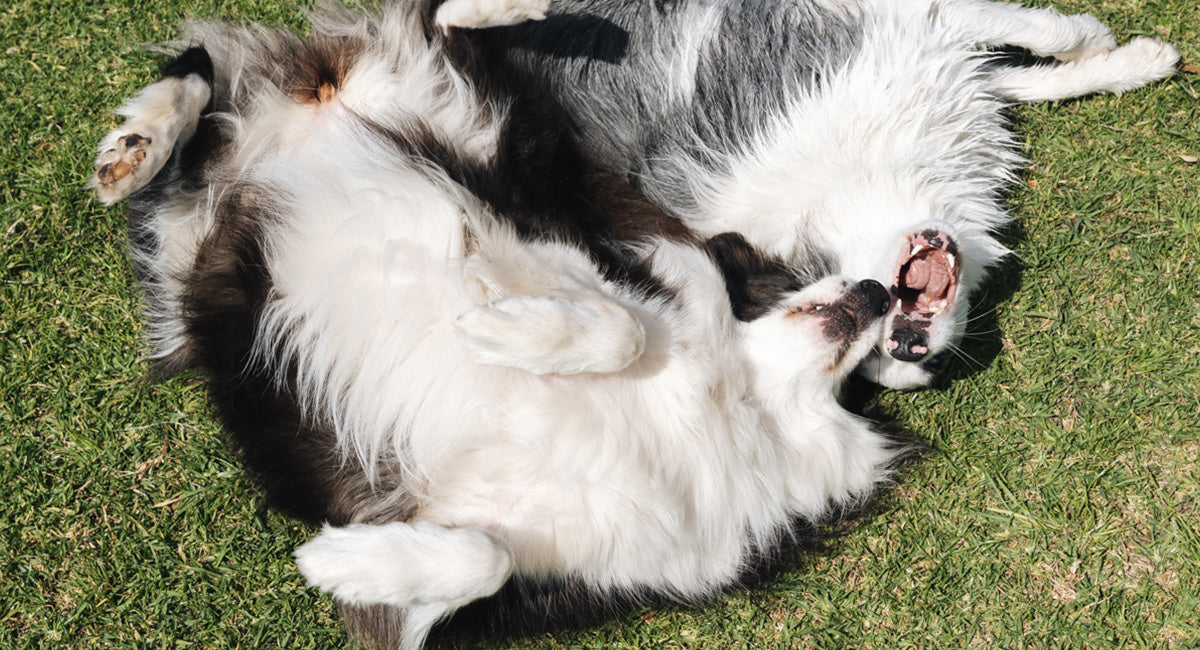
Turns out there’s a simple scientific explanation for grass rolling, and we only need to look at our dogs’ ancestors - wolves.
To ensure they maintain their apex predator standing, wolves exploit their unreal smelling abilities. In order to hunt effectively, they need to hide their scent so they’ll rub themselves in foliage to pick up the scents of other, less threatening species. They’ll also use this unique skill to ensure they’re kept hidden from larger predators.
For domestic dogs, whose only hunting is done in the pantry, they’ve inherited this trait and are indulging in a rolling good time.
A dog’s smelling skills are unlike anything we can get our mediocre noses around. When we smell cut grass, dogs experience a rich olfactory menu. Imagine everything a singular blade has been in contact with; the scent of other dogs, animals and humans. All these smells live in the grass. So as your dog investigates, they’re taking in a world we can’t begin to imagine.
Dogs also communicate through scent so by rolling around in the grass, your dog may well be adding themselves to the conversation. Social media, doggy style.
Having a good roll and shimmy against grass might feel good too, scratching an itch they can't reach. You would be familiar with the lolling tongue as they wriggle back and forth. It looks like a satisfyingly good time.
It’s perhaps a touch ironic that your dog is attempting to relieve an itch against something that may actually be the cause of it. Grass is a common culprit of skin allergies in some dogs. If your dog is constantly scratching or licking their paws and body, it’s worth having a chat to your vet about what the cause could be. You may notice this flares up depending on the season, with Spring being a typically problematic time.
Keep a spare brush in your glove box (if you drive to the park) and wrap up park plays with a good brush. It will help remove any grass fibres and debris. It’ll keep your car clean too!
Our Wipes are great at cleaning green-stained or muddy paws. They can also be helpful to wipe down dogs with grass allergies. Check with your vet if they are suitable for your allergic dog.
Finish with a spritz of Cologne, if they’re a bit stinky.

Can’t find an answer on our blog? Click here to ask Dr Lisa.